Taste Models
The core concept behind Popmelt
tl;dr A taste model is a design system optimized for AI. It captures the essence of an aesthetic in a way that lets AI apply it to entirely new scenarios: not just "use this color here," but first-principles guidance for any design decision.
What is a taste model?
A taste model is Popmelt's core concept: an aesthetic framework AI can extrapolate from. Where traditional design systems prescribe specific solutions, taste models teach the underlying logic. This gives AI the context to make coherent decisions in situations you haven't explicitly covered.
When your AI uses a model, it gets access to:
- Principles - Colors, typography, spacing, shadows, radii... and anything else you define
- Component specs - How structured interactive elements should look, function, and be used
- Asset direction - Art style guidance for images and illustrations
- Content direction - Guidelines for voice, tone, and copywriting
Anatomy of a taste model
Principles
The foundation of any taste model. Principles define your semantic design tokens: named values for colors like "primary" and "background," typography settings, border radii, and more. When your AI generates code, it references these principles as CSS variables, ensuring consistent styling throughout your project.
Components
Detailed specifications for UI components, including how they should look in different states (default, hover, active, disabled). Components reference your principles for styling, so a button knows to use your "primary" color for its background and your "radius" value for its corners.
Components can also include blueprints for composite UI patterns like pricing cards or hero sections.
Assets (optional)
Guidelines for generating images and illustrations that match your brand. Asset direction includes rendering style (flat vector, 3D, photorealistic), color palette constraints, and rules for maintaining visual consistency across generated artwork.
Content (optional)
Voice and tone guidelines for generated text. Content direction defines your brand's personality (whether it's warm and casual or professional and precise) along with word budgets, banned phrases, and templates for common copy patterns.
Public vs private taste models
Public library
These are free taste models available to everyone. Think of them as curated design systems you can use immediately:
- Base - Black with electric orange and neon green, aggressive typography
- Burst - Bold yellow and black with playful display typography
- Cinder - Dark charcoal with copper accents, monospace-forward
- Clod - Warm beige and clay, calm editorial aesthetic
- DAS - Retro CGA/VGA blues and yellows, utilitarian monospace
- Doze - Windows XP-inspired soft blues and silver glass
- Genta - Neon magenta and violet on deep plum, dreamy glow
- Gray - NYT-inspired monochrome with elegant serif typography
- June - Bold geometric shapes with thick black borders
- Madonna - Soft lilac on light surfaces, friendly and modern
- Melt - Soft grays with hot pink accents, rounded and playful
- Nack - Cream and orange, dense utilitarian layout
- Pane - Classic teal and gray, retro system UI charm
- Prism - Dark purple with magenta-lavender accents, Frutiger Aero vibes
- Strata - Cool grays with electric blue, soft and airy
- Term - Green-on-black terminal aesthetic with glitch accents
- Thanks - Inky black with lavender, dark editorial mood
- TRASH - Tabloid newspaper aesthetic, bold red headlines
- Twit - Classic social blue on white, feed-style layout
- Veil - Pure monochrome, minimal and utilitarian
- Zee - Bright lavender with acid accents, bold and chunky
You can browse public taste models on the /connect page or ask your AI what models are available.
Private collection
These are just for you. Private models are added to your collection when your AI uses Popmelt's create action (only available to subscribers) to create a custom model.
You can share models you create by clicking the share button at the top right corner of the /connect page. Anyone who opens the link will get a copy of your private model added to their collection, even if they have a free Popmelt account.
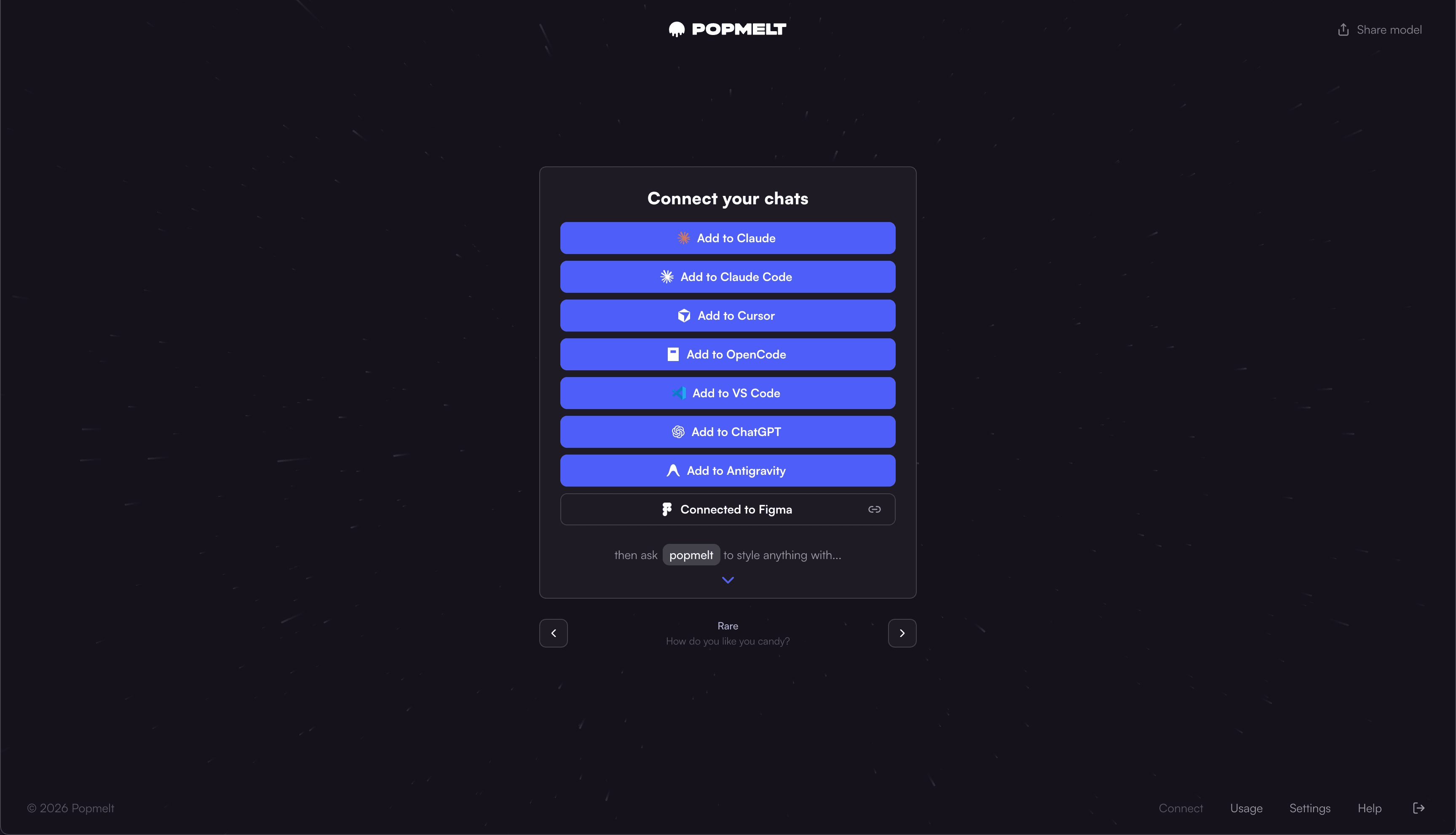
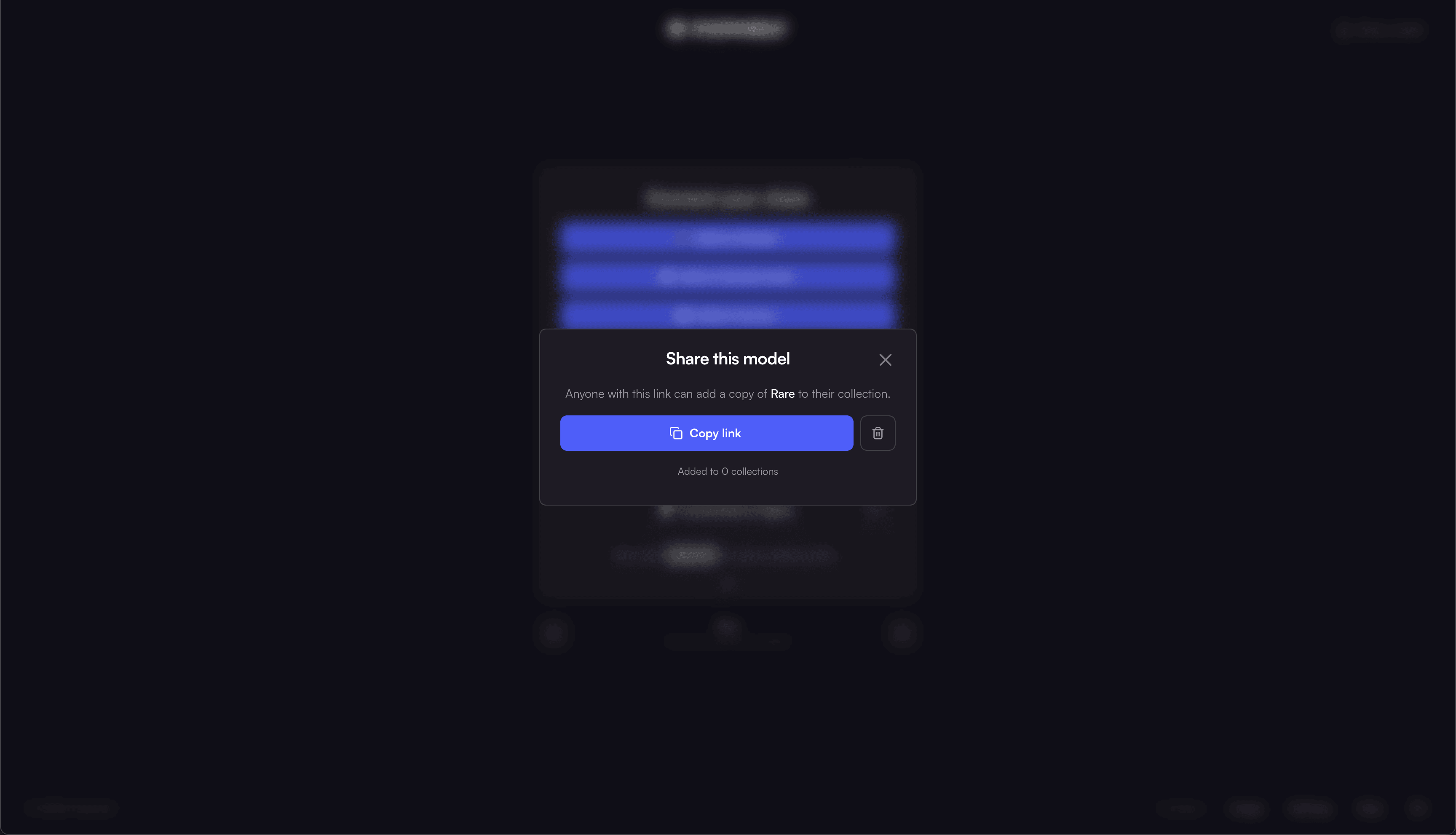
🔗 Sharing a private model is the easiest way to get friends and coworkers started with Popmelt
How AI assistants use taste models
When you connect Popmelt and give your AI a design task:
- It retrieves your active taste model's principles and component definitions
- It considers the task and, if appropriate, asks Popmelt for relevant UI patterns (hero, pricing, features, etc.)
- It combines the pattern structure with your taste model
- It generates the appropriate artifact (code, image, etc), layering your model into each decision
This means your AI can handle the unexpected (a component you haven't defined, an image you didn't anticipate needing) while staying true to your aesthetic. Instead of guessing, it reasons through design decisions based on your model's foundations.
Common questions
How is a taste model different from a design system?
Design systems are specific: they're made by humans to show other humans exactly how to handle narrow design decisions. Use this color in that location, or this component for that purpose. In many cases design systems are even locked to a specific code language or framework.
Taste models are generalizable: they give both precise guidance for narrow decisions AND first-principles guidance AI can use to make decisions in situations the model creator hasn't necessarily planned for. This lets human and AI users take the essence of an aesthetic and apply it to entirely new scenarios: take an interface element and generalize it to an entire UI, or take component system and generate imagery that suits it.
In other words, a taste model is a design system optimized for AI's unique strengths.
How do I create a taste model?
- Sample any website, using sampled principles as the foundation of a new taste model OR
- Build from scratch using your AI tool of choice with Popmelt connected.
Only Popmelt subscribers can create custom models. Our Create tier is an affordable way to get started.
I already have a design system/website/app, can I turn it into a taste model?
Yes, you have a few options:
- Sample your website. If it's a modern site with well-structured styles, Popmelt can use them to create a starter model. You can then fill gaps and add components in conversation with your AI from there.
- Design from scratch. Screenshots, color and type values, and a little back and forth with AI will give you maximum control over the details of your model. You can keep it simple, just setting principles and basic components (buttons, fields, cards) or go all out with custom components, templated layouts, and experimental principles.
- Have Popmelt design one for you. No one knows taste models like we do, and we can design custom models upon request. Get in touch with a brief project description, deadline, and budget and we'll get back to you shortly.
Can I use taste models with shadcn/tailwind/vue/vite/astro/[insert framework]?
Yes. Modern AI can translate taste models into any target language or framework. If the target doesn't support a given aspect of the model, your AI will try to reconcile the gap or gracefully skip it.
Can I share taste models with my team?
Yes, but we don't support direct collaboration (yet). When you share a taste model with someone else, they get private access to their own copy of the model you shared, not direct access to your private model.
What's next
- Principles - The foundation of a taste model
- Creating Taste Models - How to build your own
Better prototypes with less prompting
Start creating